Many people wake up with jaw soreness, morning headaches, or teeth that feel sensitive—and have no idea what is causing it. They think it is just how they feel when they wake up. They do not realize that every single night, their teeth are being damaged by grinding and clenching. Teeth grinding, also called bruxism, is one of the most common and most overlooked dental problems. If you are experiencing morning soreness, increasing tooth sensitivity, or headaches upon waking, finding a dentist in Aspen, AB, who understands grinding damage is the first step toward protecting your smile.
What Is Teeth Grinding?
Teeth grinding is when you clench and grind your teeth together—usually while sleeping, though it can happen during waking hours too. It happens unconsciously. Most people do not even know they are doing it.
The forces involved are significant. Normal chewing applies about 200 pounds of pressure. Grinding can apply three times as much, creating damage that accumulates night after night.
Several things trigger grinding:
- Stress and anxiety are the most common causes
- Sleep disorders like sleep apnea
- Certain medications
- Caffeine and alcohol consumption
- Misaligned teeth or bite problems
- Genetics — grinding often runs in families
Even if you know what causes your grinding, stopping it consciously is nearly impossible. It happens while you sleep. This is why finding mouth guards in Aspen, SW Calgary, becomes so important.
How Clenching and Grinding Are Cracking Your Teeth and Causing Jaw Pain
Understanding how clenching and grinding are cracking your teeth and causing jaw pain helps you see why this is not something to ignore.
The damage happens gradually but consistently. Night after night, the repeated grinding wears down the enamel—the protective outer layer of your teeth. Over time, this creates:
- Flattened, worn-down tooth surfaces
- Visible cracks and fractures
- Increased tooth sensitivity — especially to hot and cold
- Chipped teeth that look damaged
- Exposed dentin — the sensitive layer beneath the enamel
But the damage extends beyond just the teeth.
The muscles of the jaw are constantly tensed. By morning, the jaw joint is fatigued. This leads to:
- Morning jaw soreness and stiffness
- Pain when chewing
- Tension headaches that can last all day
- Clicking or popping sounds in the jaw joint
- A locked jaw that is difficult to open
Many people treat these symptoms separately—taking pain relievers given by a dental clinic near you for headaches, muscle relaxers for jaw pain—without realizing they are all caused by the same underlying problem.
The Long-Term Cost of Ignoring the Problem
Grinding damage is cumulative. Each night adds more wear, more cracks, more jaw strain.
Over the years, the damage can become severe:
- Teeth become so worn that they need crowns or other restorations
- Cracks deepen until the tooth breaks, and extraction becomes necessary
- The jaw joint develops chronic pain conditions
- Sleep quality decreases because the jaw is never truly relaxed
- Quality of life declines due to chronic headaches and jaw pain
All of this is preventable with the right protection.
Why Wearing a Custom Mouth Guard Can Stop the Damage and Headaches
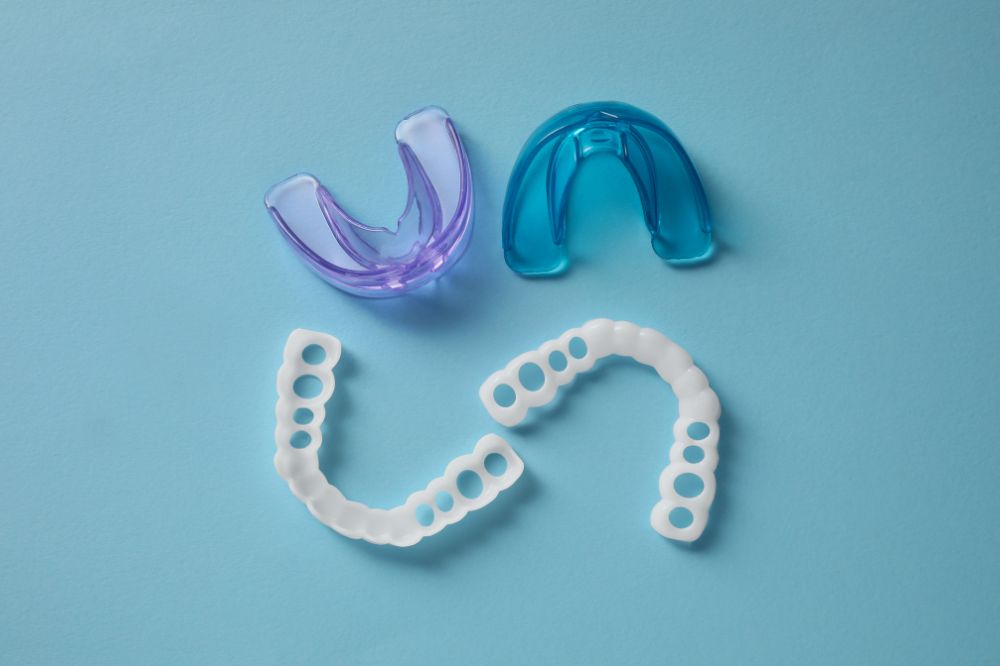
Why wearing a custom mouth guard can stop the damage and headaches comes down to simple physics. A mouth guard creates a barrier between your upper and lower teeth. When you grind, your teeth grind against the guard instead of each other. The guard absorbs the force—protecting your natural teeth from the damage. Mouth guards near you come in different types. Store-bought guards offer minimal protection. A custom mouthguard—made by a dentist from precise impressions of your teeth—offers genuine protection because it fits exactly and stays in place throughout the night.
Benefits of a custom mouthguard include the following:
- Eliminates tooth-to-tooth grinding damage
- Reduces jaw muscle tension and strain
- Decreases or eliminates morning headaches
- Protects expensive dental work like crowns or veneers
- Helps in decreasing grinding and jaw clenching
- Is a lot cheaper than fixing grinding damage later
The majority of individuals see results within just a few days. Morning stiffness is less. Headaches lessen or vanish. The jaw feels much more relaxed after a few weeks.
Protect Your Smile and Your Quality of Life — Montreux Dental Is Here for You
Teeth grinding is not something you have to live with. With the right protective device and professional guidance, you can stop the damage, eliminate the pain, and protect your teeth for years to come. The team of Montreux Dental understands grinding damage and custom-made mouthguards for your teeth and your grinding style. Contact us to book an appointment now to protect your smile and get a hassle-free night’s sleep at night.
FAQs:-
Q1: How do I know if I am grinding my teeth at night?
Common signs include morning jaw soreness, facial pain, worn-down teeth, increased sensitivity, chips or cracks in your teeth, and morning headaches—a dentist near you can also identify grinding damage during a regular checkup.
Q2: How long does a custom mouth guard last?
With proper care—rinsing daily and storing in a clean case—a custom mouthguard typically lasts three to five years before needing replacement due to normal wear and tear.
Q3: How long does it take to adjust to wearing a custom mouth guard?
Most people adjust within one to three nights—custom guards are designed to be comfortable, and many patients find that the reduction in jaw pain and morning discomfort makes them want to keep wearing them immediately.
Q4: Will a mouth guard change how I sleep or affect my breathing?
A properly fitted custom mouthguard should not interfere with sleep or breathing—it sits on your teeth and allows normal jaw movement and breathing throughout the night.